
Don't Break the Ice
A children's game of tapping ice blocks without dropping the figure.

Wikipedia / Wikimedia Commons
Don't Break the Ice is a tabletop game designed for children, meant for two to four players aged three and older. It was originally released by Schaper Toys in 1968, and later acquired by Milton Bradley, a Hasbro subsidiary, in 1986. The game remains in production, and special versions were created to tie in with the movies *Frozen* (2013) and *Frozen II* (2019).
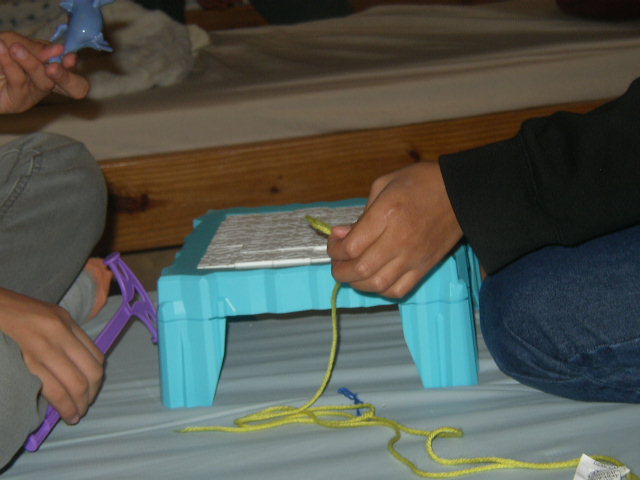
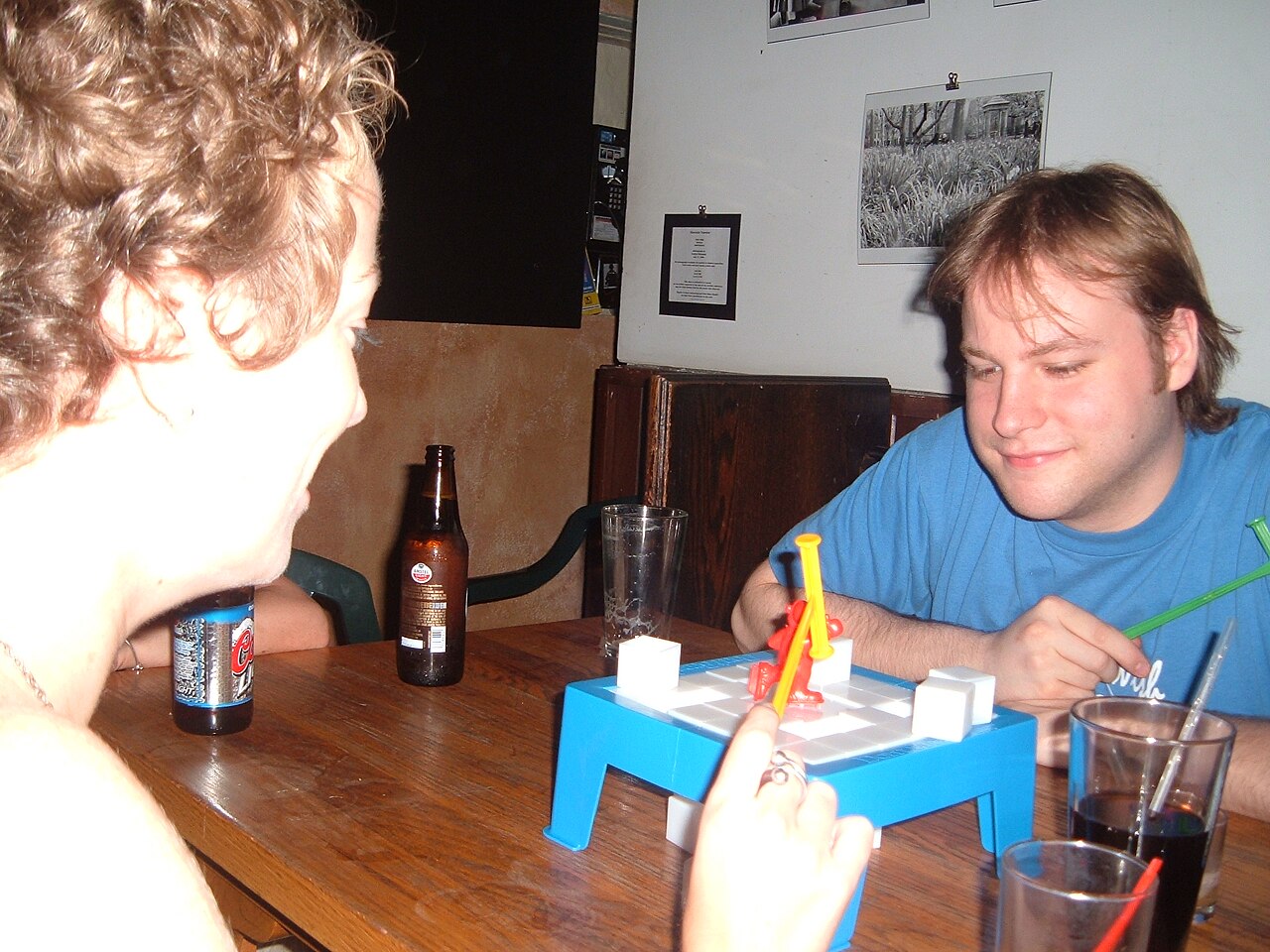
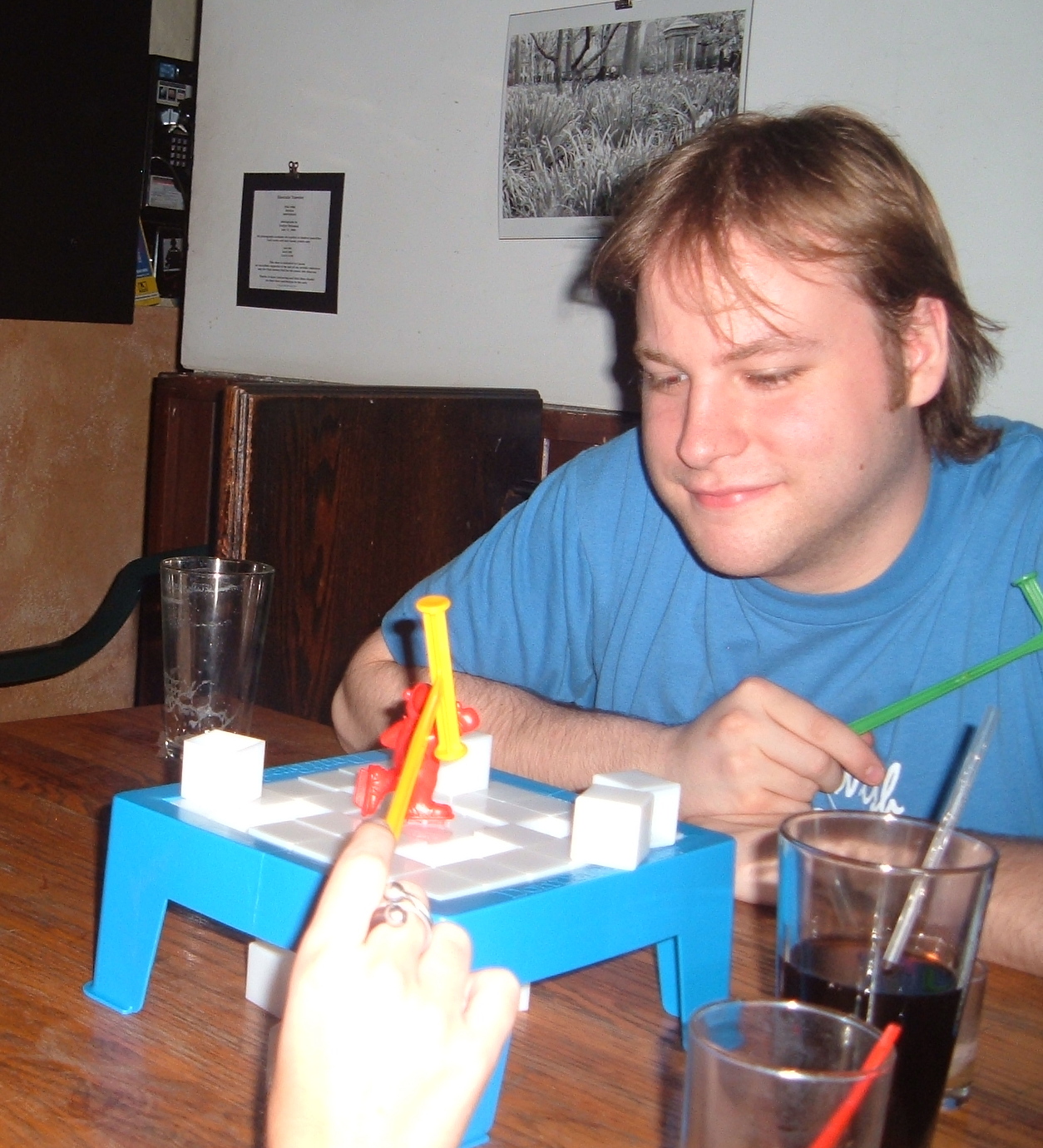
The game includes a set of plastic ice blocks, a stand, and a small plastic hammer for each player. One block is larger than the others and holds a plastic character—either Phillip the Penguin, a figure called "Ice Man," or a polar bear, depending on the edition. To set up, the stand is turned upside down, the blocks are placed inside the frame, and then the stand is flipped upright so the blocks stay in place by pressing against each other. Players take turns tapping blocks with their hammers. The game ends when a player knocks the block with the character figure through the stand. The player who took the turn just before that one wins.
- Type
- Children's tabletop game
- Players
- 2 to 4
- Age range
- 3 and up
- Original publisher
- Schaper Toys
- Year introduced
- 1968
- Current publisher
- Hasbro subsidiary Milton Bradley (since 1986)
- Status
- Still in production
Lore & Background
Don't Break the Ice is played with a set of plastic 'ice blocks', a stand, and one miniature plastic hammer for each player. One ice block is larger than the rest and has a plastic character standing on it—this varies from edition to edition, being either Phillip the Penguin, a man referred to as 'Ice Man', or a polar bear. To set up the game, the stand is turned upside down and the ice blocks placed into the frame, so that the shared uniform compression of the blocks pressed against each other will cause them to stay in place when the stand is turned upright. Players then take turns removing ice blocks by tapping with the hammers. The game ends when one player causes the block with the character figure to fall through. The player who took the turn before that one wins the game.
Reader's Guide
Don't Break the Ice has remained a staple of children's tabletop gaming since its introduction in 1968 by Schaper Toys. Its simple premise—tapping out ice blocks without dropping the central figure—makes it accessible to young children ages 3 and up. The game's longevity is evidenced by its continued production and its acquisition by Hasbro subsidiary Milton Bradley in 1986. The release of special editions tied to the animated films Frozen (2013) and Frozen II (2019) demonstrates its enduring cultural relevance and ability to adapt to contemporary media. The game's design relies on the mechanical principle of compression to hold the blocks in place, creating a tension that players must carefully manage. Its appeal lies in the balance between skill and luck, as each tap risks collapse. The variation in the character figure—Phillip the Penguin, Ice Man, or a polar bear—reflects minor thematic updates over the decades. As a product that has spanned over five decades, Don't Break the Ice represents a classic example of a simple, durable children's game that continues to find new audiences.
Did You Know?
- The game was first marketed by Schaper Toys in 1968.
- It was sold to Hasbro subsidiary Milton Bradley in 1986.
- Special editions were released for the films Frozen (2013) and Frozen II (2019).
- The character figure on the large ice block varies by edition, including Phillip the Penguin, Ice Man, or a polar bear.
A Long-Standing Toy with a Rich Ownership History
Don't Break the Ice first hit store shelves in 1968 under the banner of Schaper Toys, a company that would eventually see the title pass into the hands of one of the biggest names in the toy industry. In 1986, the game was acquired by Milton Bradley, which operated as a subsidiary of Hasbro, and it has remained in continuous production since that transfer. Rather than fading into obscurity after the ownership change, the title has enjoyed remarkable longevity, surviving more than five decades of shifting toy-market trends. Hasbro has kept the game fresh by tying it to major cultural moments: special editions were produced to coincide with the release of Disney's Frozen in 2013 and its sequel Frozen II in 2019, linking a classic tabletop experience to a generation raised on animated blockbusters. The fact that a game originally designed for very young children in the late 1960s is still being manufactured and rebranded for new audiences speaks to the enduring appeal of its core concept.
The Elegant Mechanics of a Simple Game
The core loop of Don't Break the Ice is deceptively simple, yet it creates a surprisingly tense experience for its target audience. During setup, a player inverts the plastic stand and slots the ice blocks into its frame. Because the blocks are pressed tightly together, their mutual compression holds the entire structure in place once the stand is flipped upright. From there, each player takes a turn tapping one of the blocks with their assigned miniature hammer, working to loosen it from the stack. The tension builds with every successful removal, as the remaining blocks shift and the structure grows less stable. The game reaches its climax when a player's tap causes the one oversized block—the one topped with a character figure—to tumble through the opening. That player loses; the one who moved immediately before them is declared the winner. The entire sequence rewards patience, a light touch, and a dash of nerve, making it ideal for small hands still developing fine motor control.
Components and Character Variations Across Editions
Every copy of Don't Break the Ice ships with a small, carefully curated set of pieces: a plastic stand, a collection of uniform ice blocks, one larger block, and a miniature hammer for each participant. The larger block is the star of the set, crowned by a standing character figure whose identity shifts depending on the edition. Some versions feature Phillip the Penguin, others present a generic figure labeled Ice Man, and still others place a polar bear atop the critical block. This rotating cast of characters gives the game a playful variety that keeps it feeling fresh across reprints and special releases. The hammers, while small enough for tiny fingers, are sturdy enough to deliver the gentle taps the game demands. The stand doubles as both a storage frame and the structural backbone of the play area, meaning the entire game can be assembled and disassembled in seconds. Together, these components create a self-contained experience that requires no additional tools, boards, or rulebook beyond a quick verbal explanation.
Designed for the Youngest Players
From the very first print run in 1968, Don't Break the Ice has been explicitly designed for the youngest segment of the toy-buying market: children aged three and up, playing in groups of two to four. That narrow age target shapes nearly every design choice. The rules can be communicated in a single sentence—tap a block, don't drop the character—eliminating the need for literacy or complex rule-reading. The physical components are sized for small hands, and the turn-based structure means no player is ever left waiting more than a few seconds. The game's low barrier to entry has helped it travel well across generations and cultural contexts, and Hasbro has leveraged that broad appeal by pairing the title with globally recognized franchises. The 2013 and 2019 Frozen tie-in editions, for example, introduced the classic mechanics to families already excited about Disney's ice-themed stories, effectively bridging a 1960s tabletop design with a 21st-century animated audience without altering the fundamental experience.
Gallery


Frequently Asked Questions
What is Don't Break the Ice?
Don't Break the Ice is a tabletop game for young children in which players take turns gently tapping a stack of plastic ice blocks with a small hammer, trying to knock the blocks away without toppling the character perched on top.
How many people can play Don't Break the Ice and what age is it for?
The game is designed for two to four players and is recommended for kids aged three and up, making it a popular choice for preschoolers and early elementary children.
Who originally made Don't Break the Ice?
The game was first released in 1968 by Schaper Toys and later came under the Milton Bradley brand, a Hasbro subsidiary, following a 1986 acquisition.
What character sits on top in Don't Break the Ice?
Depending on the version, the figure perched on the largest ice block can be Phillip the Penguin, a character called Ice Man, or a polar bear.
Are there any special editions of Don't Break the Ice?
Yes—Hasbro produced themed versions of the game to coincide with Disney's Frozen in 2013 and Frozen II in 2019, swapping in characters from those films.
More in Children's board games 1-24
Spotted an error? Know more?
This is a living reference — every entry is fact-audited, and reader corrections feed straight into our audit queue. Suggest an edit · See this site's audit record