
Crazy Clock Game
A lesser-known Rube Goldberg machine building board game.

Wikipedia / Wikimedia Commons
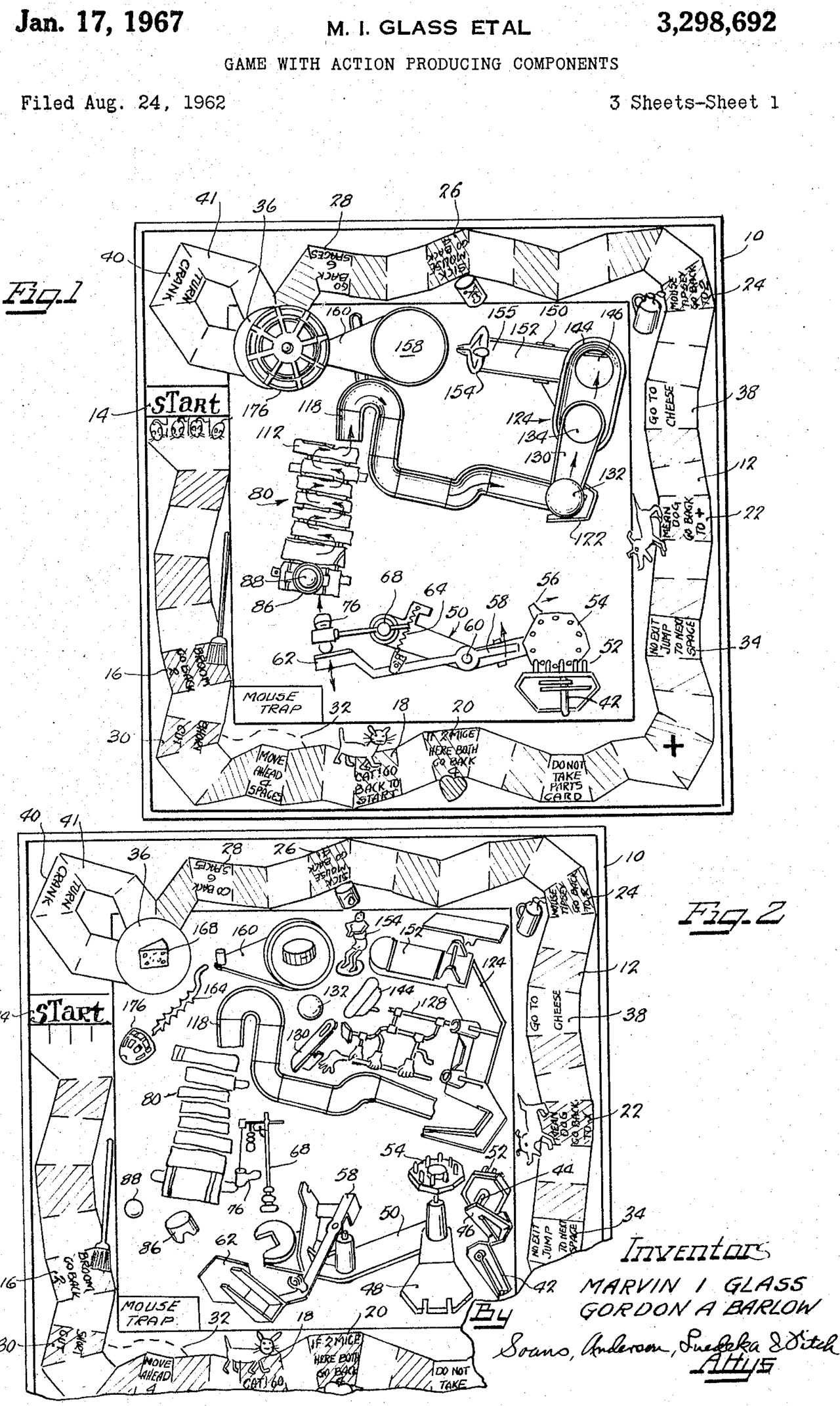
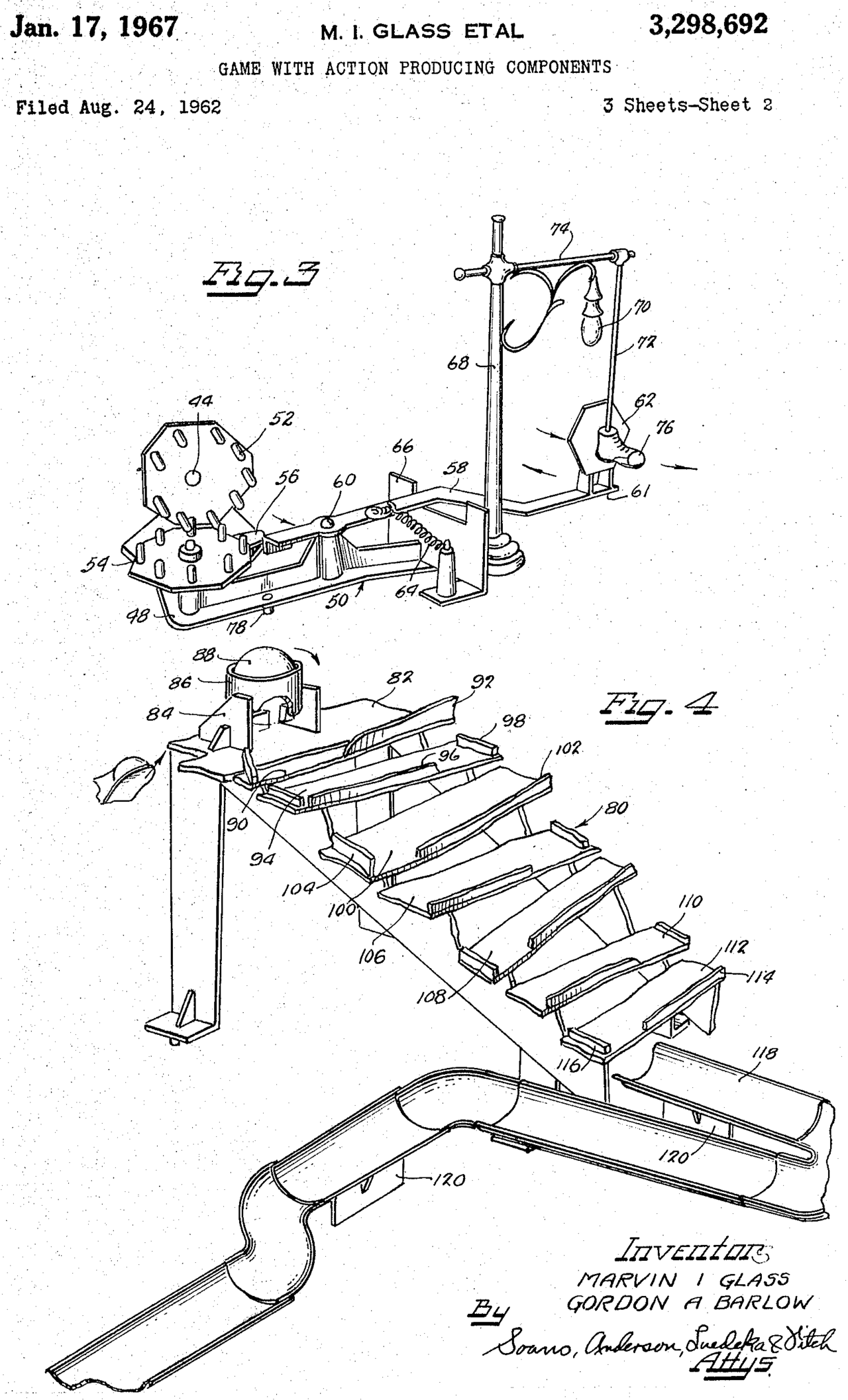
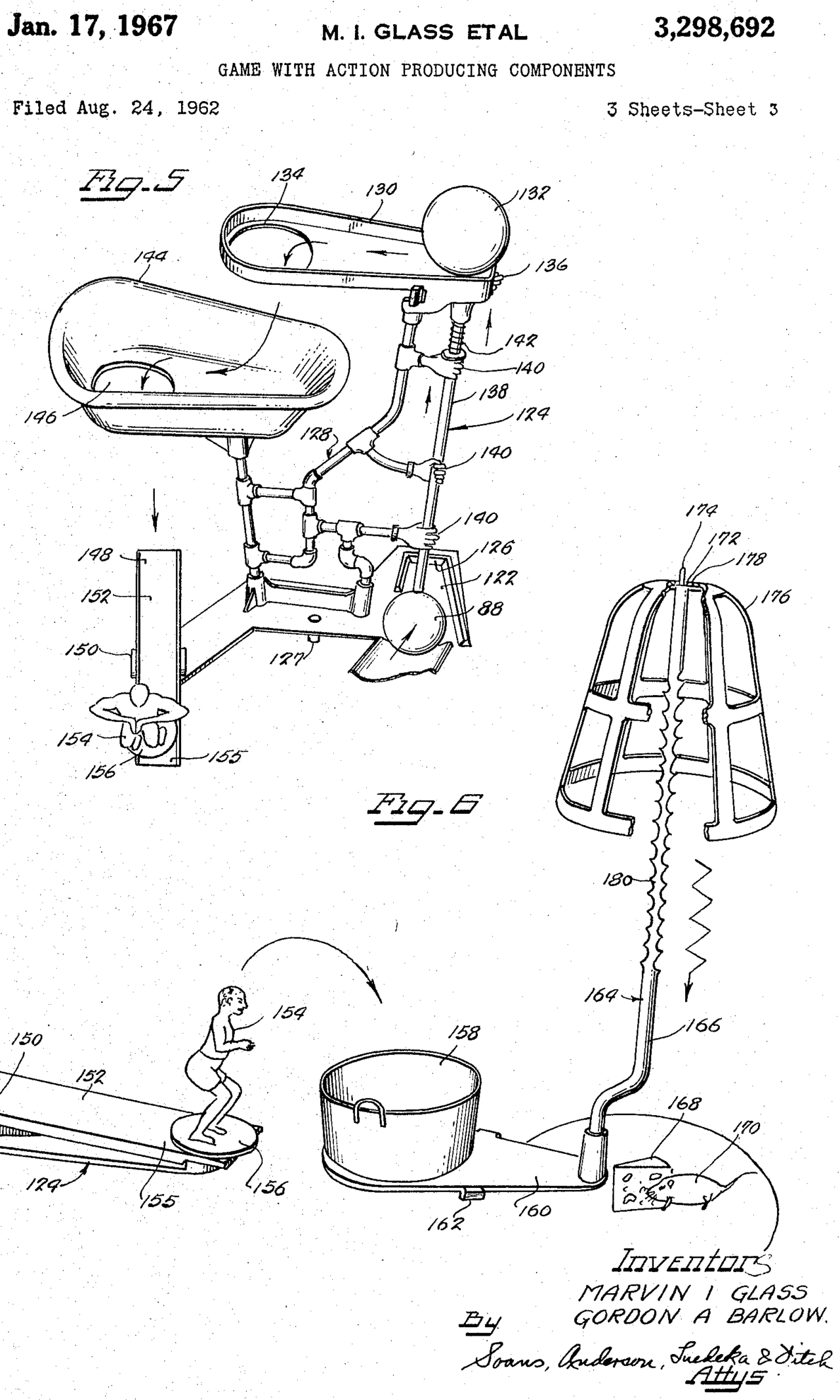
Crazy Clock Game (also known as Crazy Clock) is a board game designed by Marvin Glass and his company, Marvin Glass and Associates, and first published in 1964. It is one of two lesser-known games Glass developed based on Rube Goldberg designs, following the success of Mouse Trap. The game involves players racing to build a Rube Goldberg machine.
- designer
- Marvin Glass and Marvin Glass and Associates
- year_published
- 1964
- field
- Board game design
- known_for
- Rube Goldberg-style machine building game
- related_to
- Mouse Trap, Fish Bait Game
Lore & Background
Crazy Clock Game was created by game designer Marvin Glass (and his company, Marvin Glass and Associates) as a follow-up to the successful Mouse Trap. Glass acknowledged that Mouse Trap had been greatly influenced by Rube Goldberg's illustrations, though he refused to pay licensing or royalty fees. He later developed Crazy Clock Game and Fish Bait Game, both based on Goldberg designs, neither of which credit Goldberg's influence.
In Crazy Clock Game, players race to build a Rube Goldberg machine. The game comes with a pack of cards, each illustrating how one piece of the machine fits in. The deck is dealt out to the players. The player starts with the first card, card 1; players then play as many cards (install as many machine components) as they can, then pass to the next player. After fully assembling, they take turns trying to operate the machine, starting with the player who installed the last component; the winner is the one who first succeeds.
Elderly and near retirement, Rube Goldberg declined to take legal action against Glass, primarily because inspiration and ideas are not intellectual property that can be protected with a copyright, trademark, or patent. Goldberg instead chose to sell licensing rights for his drawings to another toy company, Model Products, to help secure the rights to specific intellectual property that he could own and receive royalties from.
Reader's Guide
Crazy Clock Game represents a lesser-known but notable entry in the lineage of Rube Goldberg-inspired board games. Designed by Marvin Glass and his company, it followed the commercial success of Mouse Trap but did not achieve the same popularity. The game's mechanics—building a machine from cards and then attempting to operate it—reflect a cooperative-to-competitive structure similar to Mouse Trap, though with a simpler card-based assembly system. Its significance lies in illustrating the legal and creative tensions around intellectual property in game design: Glass used Goldberg's concepts without licensing, and Goldberg, near retirement, chose not to sue, instead pursuing licensing deals with another company. Crazy Clock Game thus serves as a case study in how inspiration and ideas, while not protectable as intellectual property, can still shape commercial products and legal strategies. The game's existence also highlights the broader trend of three-dimensional board games and Rube Goldberg machines in mid-20th-century toy design.
Did You Know?
- Crazy Clock Game was published in 1964, one year after Mouse Trap.
- It was one of two lesser-known games Marvin Glass developed based on Rube Goldberg designs, the other being Fish Bait Game (1965).
- Neither Crazy Clock Game nor Fish Bait Game credit Rube Goldberg's influence.
- Rube Goldberg declined to take legal action against Glass over the use of his designs, as inspiration and ideas are not protectable intellectual property.
Origins & Development Context
Crazy Clock Game, also known simply as Crazy Clock, emerged in 1964 from the design studio of Marvin Glass and Associates. It arrived as a companion piece to the studio's other Rube Goldberg-inspired title, Fish Bait Game, which followed a year later in 1965. Both games occupied a more obscure corner of the board game market compared to their more famous sibling, Mouse Trap. What makes Crazy Clock's development story particularly notable is its relationship to the cartoonist whose sequential machine illustrations clearly inspired its concept. Glass and his team acknowledged the influence of Goldberg's work on their designs, yet they declined to offer any licensing fees or royalties to the artist. This decision placed Crazy Clock within a broader pattern of uncredited inspiration that would later draw attention to the legal gray area surrounding creative ideas in the toy industry.
Gameplay & Card-Based Construction
Crazy Clock Game centers on a competitive race to assemble a Rube Goldberg-style machine from individual components. Rather than a fixed board with predetermined build spaces, the game distributes its construction instructions across a pack of cards, each one depicting how a specific piece of the machine connects to the next. At the start of play, this deck is dealt among the participants. The first player begins with card number one, and from there, each player in turn lays down as many cards as they wish, physically installing that many machine components into the growing contraption. Once a player passes, the next player continues the build. This continues until the machine is fully assembled. The final phase then shifts to operation: players take turns attempting to trigger the completed mechanism, beginning with whoever installed the last component. The first player to successfully activate the machine claims victory.
The Goldberg Influence & Legal Landscape
The intellectual debt Crazy Clock Game owes to Rube Goldberg's iconic sequential machine cartoons was openly recognized by Marvin Glass and his associates, yet no financial compensation was ever extended to the cartoonist. Glass and his team simply refused to pay licensing or royalty fees for the conceptual inspiration. This created an uncomfortable legal situation for Goldberg, who found himself unable to pursue the matter through traditional intellectual property channels. Because the underlying ideas and concepts of a machine sequence do not qualify for protection under copyright, trademark, or patent law, there was no straightforward legal remedy available to him. Rather than expend energy on a likely fruitless lawsuit, the elderly and near-retirement Goldberg made a pragmatic choice: he sold the licensing rights to his actual drawings to a different toy company, Model Products, thereby securing ownership over specific, protectable intellectual property and earning royalties from a willing partner.
Place in the Marvin Glass Portfolio
Crazy Clock Game occupies a modest but instructive position within the broader catalog of Marvin Glass and Associates. Released in 1964, it sat alongside the studio's more celebrated Mouse Trap (1963) and the slightly simpler Fish Bait Game (1965), forming a small cluster of three-dimensional, Rube Goldberg-inspired board games from the mid-1960s. Unlike Mouse Trap, which went on to become a mass-produced household name and one of the earliest widely distributed three-dimensional board games, Crazy Clock remained a lesser-known title that never achieved comparable cultural penetration. Its card-driven construction system and competitive operation phase set it apart mechanically from the cooperative-then-competitive structure of Mouse Trap, offering a more straightforward race-to-build-and-trigger experience. Together, these three titles illustrate how a single design studio could explore multiple interpretations of the same visual source material within a two-year span, each yielding a distinct gameplay identity.
Gallery
Frequently Asked Questions
What is Crazy Clock Game?
Crazy Clock Game is a 1964 board game in which players race to assemble a Rube Goldberg-style contraption. It was designed by Marvin Glass and his firm, Marvin Glass and Associates.
How is Crazy Clock Game connected to Mouse Trap?
Both titles share the same designer and the same Rube Goldberg machine-building concept. Crazy Clock was one of two follow-up games Glass created after Mouse Trap became a commercial hit.
What do players actually do in Crazy Clock Game?
The core activity is a race: each player works to build a Rube Goldberg-style machine as quickly as possible. There is no extended narrative or character roles—just the speed of construction.
When was Crazy Clock Game published and by whom?
Marvin Glass and Associates released the game in 1964. It sits alongside another lesser-known title, Fish Bait Game, in Glass's catalog of Rube Goldberg-inspired designs.
Why hasn't Crazy Clock Game become as iconic as Mouse Trap?
Despite sharing the same creative DNA, it never captured the same mainstream audience. Most board-game histories mention it only as a footnote to the Mouse Trap phenomenon.
More in Children's board games 1-24
Spotted an error? Know more?
This is a living reference — every entry is fact-audited, and reader corrections feed straight into our audit queue. Suggest an edit · See this site's audit record